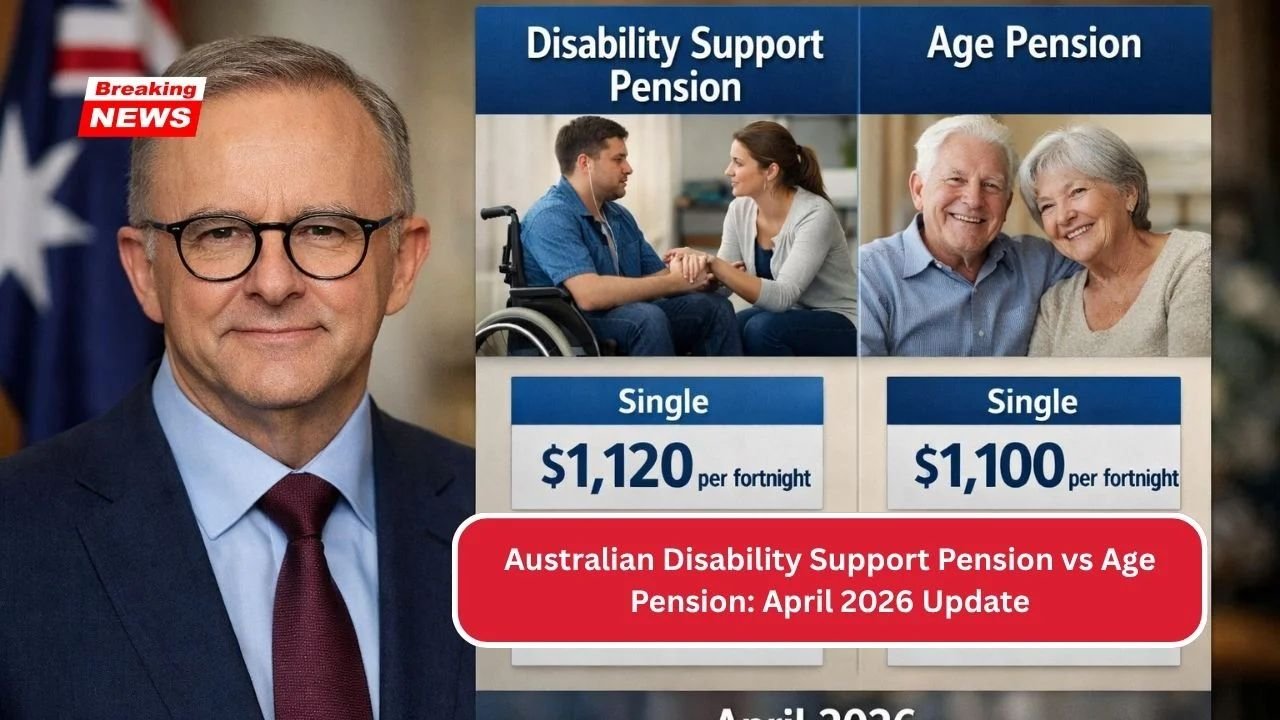
Australia’s welfare system continues to provide essential financial support through two major Centrelink programs in 2026: the Age Pension and the Disability Support Pension (DSP). While both payments offer similar financial assistance, they serve very different groups and come with distinct eligibility rules, assessments, and obligations. Understanding these differences is key for Australians seeking the right support and maximising benefits.
Purpose of Each Pension
The Age Pension primarily supports older Australians who have reached retirement age. It provides a steady income for individuals aged 67 and over who meet residency and financial criteria, helping retirees maintain a basic standard of living after leaving the workforce.

In contrast, the Disability Support Pension is designed for people unable to work due to a long-term medical condition, whether physical, intellectual, or psychological. The DSP ensures that those with limited capacity to earn an income have access to financial support.
While both payments function as safety nets, the Age Pension focuses on retirement, whereas the DSP addresses limited work capacity due to health conditions.
Eligibility Requirements
Eligibility highlights the key distinctions between the two pensions.

For the Age Pension, applicants must meet the minimum age requirement of 67 and satisfy residency rules. They must also pass income and asset tests, which determine payment levels. The process is straightforward and primarily based on financial criteria.
The DSP involves a more complex application process. Applicants must provide medical evidence showing that their condition is permanent and prevents them from working at least 15 hours per week. A formal work capacity assessment may also be required. Approval relies heavily on documented medical evidence and strict assessment criteria.
Payment Rates in April 2026
Following the 2026 indexation, both pensions offer similar payment rates. Single recipients typically receive between $1,100 and $1,200 per fortnight, while couples receive slightly lower amounts per person. These figures include additional components such as the Pension Supplement and Energy Supplement.

Actual payments vary based on personal financial circumstances, including income, assets, and living arrangements.
Income and Asset Testing
Both pensions are subject to means testing to ensure support is targeted to those who need it most.
- Age Pension: Income and assets affect payment levels, but recipients are not required to work. Payments continue as long as eligibility criteria are met.
- DSP: Income and assets are strictly assessed, and earnings above set limits can reduce or suspend payments. Financial management is crucial for DSP recipients who attempt part-time work.
Work and Activity Obligations
A major difference lies in work expectations:
- Age Pension: No work requirements exist; retirees are not expected to participate in the workforce.
- DSP: Recipients must demonstrate limited work capacity. In some cases, they may be encouraged to participate in suitable work. Any income earned must be reported, and ongoing medical evidence may be required to maintain eligibility.
Deeming Rates and Indexation
Both pensions are influenced by annual indexation and deeming rate adjustments. In 2026, deeming rates are set at 1.25% for lower thresholds and 3.25% for higher thresholds. These rates estimate income from financial assets such as savings and investments, regardless of actual earnings.
Indexation ensures pension payments keep pace with inflation, helping recipients manage rising living costs including food, healthcare, and housing.
Choosing the Right Pension
Eligibility determines which payment applies. The Age Pension suits individuals who have reached retirement age and meet financial criteria, offering a simple structure with minimal ongoing requirements. The DSP is for those with permanent work limitations due to disability, with stricter eligibility checks and ongoing compliance obligations.
Understanding which pension aligns with your situation is essential to accessing the correct support.
Key Considerations for Applicants
Applicants should maintain accurate and up-to-date records, including financial information, residency details, and, for DSP applicants, comprehensive medical documentation.
- Age Pension: Keep income and asset records current to avoid errors in payment calculations.
- DSP: Detailed medical evidence and documentation of work limitations are essential for approval and continued eligibility.
Staying informed about policy updates can help maximise entitlements and ensure smooth administration.
Conclusion
The April 2026 update underscores that while the Age Pension and Disability Support Pension provide similar financial support, they serve distinct purposes. The Age Pension offers a stable income for retirees with minimal ongoing requirements, while the DSP supports individuals with permanent work limitations, requiring rigorous assessment and compliance.
By understanding the differences in eligibility, payment structure, and obligations, Australians can make informed decisions and access the benefits they are entitled to. Keeping personal information accurate and staying aware of policy changes ensures recipients navigate the system effectively and confidently.